

Setting New Year Goals
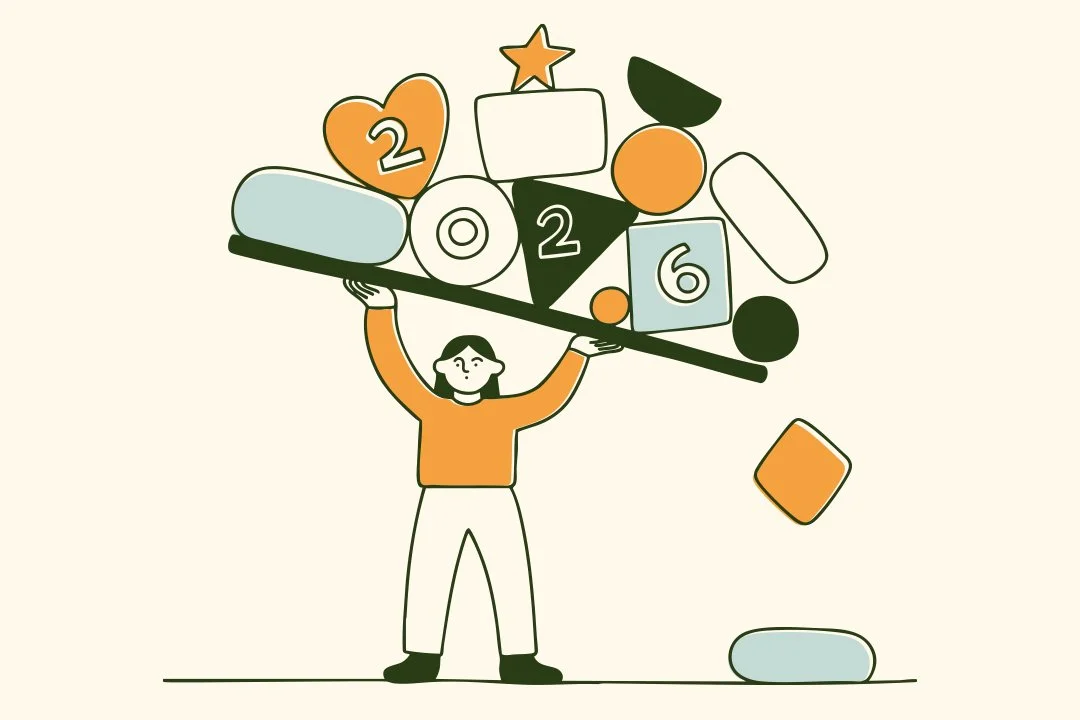
It’s 2026. Somehow.
2025 flew by, and here we are, sixteen days into the new year surrounded by resolutions and the quiet pressure of not dropping your goals or to have things “figured out” already.
January has a funny way of doing that. The calendar flips, and suddenly it feels like we’re expected to wake up as a better, more disciplined version of ourselves overnight. New habits, new routines, new expectations and most of them entirely self-imposed.
On New Year’s Eve, I found myself eating 12 grapes at midnight, one for each goal I wanted to manifest. I did the same thing last year, crouched under a table while my family watched fireworks (TLDR: it was awkward and everyone asked why I was doing it). And while I can’t say every grape worked, one definitely did: I got a job at Avo! That felt like a win worth celebrating.
Things got even more interesting when TikTok introduced the tradition of throwing lentils over your head for good luck, and my coworker Joel mentioned eating black-eyed peas on New Year’s Day. At this rate, by 2027, I’ll be eating grapes, throwing lentils, and cooking peas just to be safe and lucky. Fingers crossed it will not come to that.
But jokes aside, here’s the truth:
There are a lot of goals floating around right now. And while motivation is high in January, it often fades by February. So instead of adding more pressure, here are a few ways to set goals that actually stick without feeling like you’re failing before the second month rolls around.
Make SMART goals
This framework has been drilled into us since middle school, but it works for a reason.
SMART goals are specific, measurable, attainable, relevant, and time-based and they create clarity instead of anxiety.
For example:
Instead of saying “I want to get stronger,” try: “I want to be able to do five push-ups by December 2026.”
There’s a clear metric. A clear timeline. And at the end of the year, you can actually assess whether you got there and I hope you do.
Build small cues into your existing routine
Habits don’t form overnight. On average, it takes about 66 days for something to stick.
One idea from Atomic Habits that always stayed with me is the power of cues, specifically small signals that prompt a behavior. When I moved to New York and started working full-time, I struggled to keep up with exercise. I knew I wouldn’t do it after work, so I adjusted my mornings instead.
My cue? I never close my blinds. When the sun comes up, I wake up. At night, I set a 9:00 p.m. alarm for 30 minutes of mindless TikTok scrolling and once that’s done, I go to sleep.
Same thing with supplements: I put them where I cannot miss them. The goal is not only discipline. It’s setting yourself up to win.
Set goals that actually make sense for you
Here’s a hard truth: we often want things because someone else has them.
If I say I want a Ferrari by December 2026 but I don’t drive and have $5 in my bank account, how realistic is that? A better goal might be: “I’ll put $5 a month into a ‘Ferrari fund.’” Even better question: Do I even want a Ferrari? Or do I just like that my neighbor has one? Your goals should improve your life and not reflect someone else’s Instagram reel.
That’s it for this month’s note. January can feel loud, especially when everyone is sharing resolutions and updates online. Just remember: you’re allowed to move at your own pace. You don’t need to announce your goals to validate them and you don’t need to have everything figured out by month two.
And while you’re taking the time to think about what you want to set and what you don’t, we have a small treat to help. We’re giving away three single-credit gift cards to Othership and a chance for you to do all this reflecting in a sauna or ice bath ;) If you’d like one, just email me. First come, first serve.
Other than that, don’t worry because you’ve got 2026 by the horns. It’s going to be a good year, people!
Signing off,
Isabel
